![[back]](/assets/home_24dp_E3E3E3_FILL0_wght400_GRAD0_opsz24.svg "[back]")
![[search]](/assets/search_24dp_E3E3E3_FILL0_wght400_GRAD0_opsz24.svg "[search]")
State Modulators: The Forgotten Middle Ground Between Medicine and Intoxication
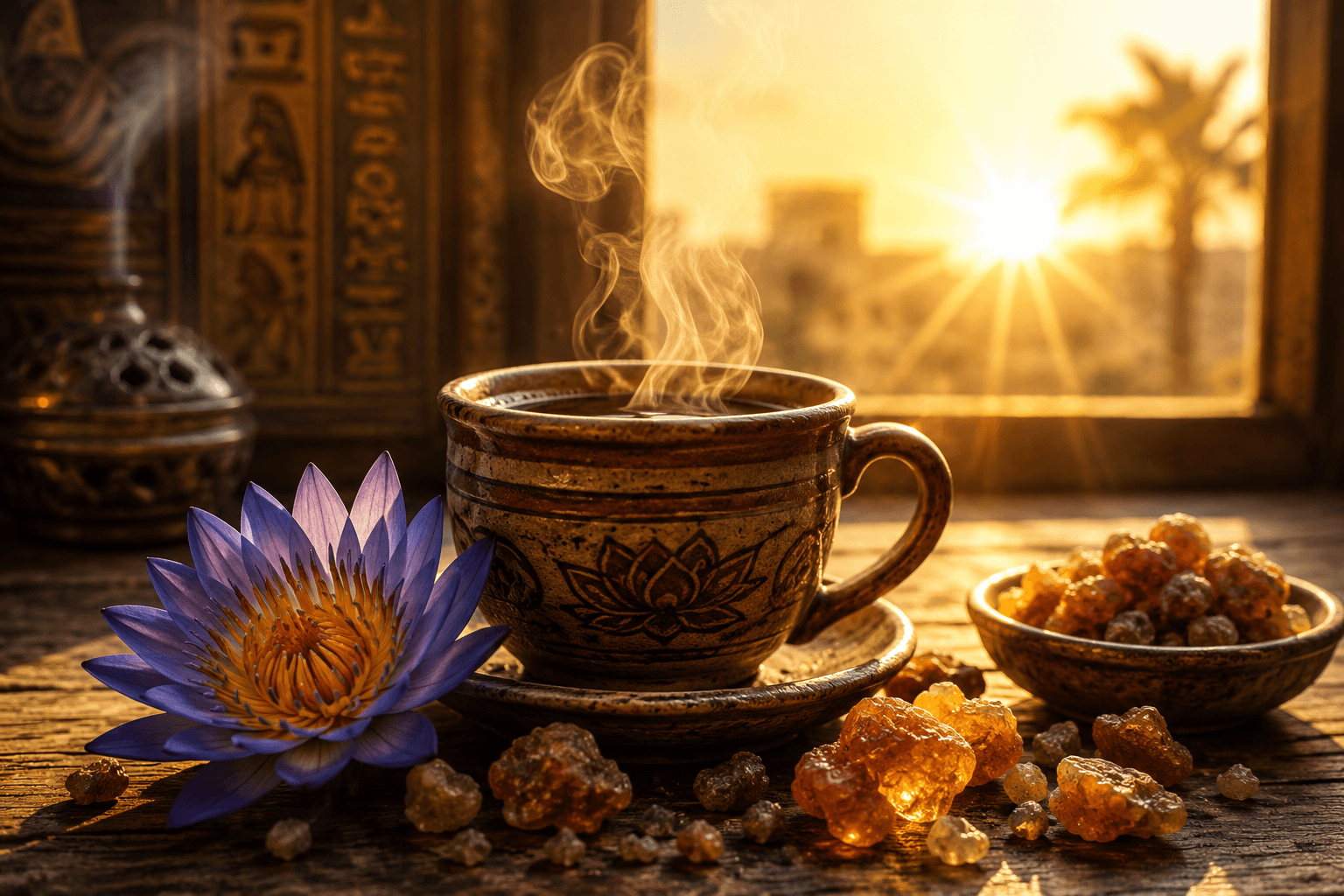
Consciousness State Modulators
Modern culture tends to divide psychoactive substances into only two categories. A substance is either a medicine intended to treat disease, or it is an intoxicant intended to alter consciousness. This division is convenient, but it leaves out an enormous class of substances that have been used by humanity for thousands of years.
Many plants, resins, teas, smokes, wines, perfumes, and ritual preparations do not strongly intoxicate the user. They do not produce visions. They do not render a person incapable of functioning. Yet they clearly influence mood, attention, perception, memory, emotion, and consciousness.
These substances occupy a forgotten middle ground.
For lack of a better term, we may call them State Modulators.
A state modulator is any substance that subtly biases consciousness toward a particular mode without overwhelming it.
The goal is not intoxication.
The goal is guidance.
The Ancient View
Ancient peoples did not separate mind and body as sharply as modern culture often does. Plants and other pharmakon were understood to possess specific characters, virtues, powers, or temperaments. Some awakened the mind. Some quieted it. Some encouraged dreams. Some promoted courage. Others encouraged contemplation. Others made one near death and trip the rift as they descended into and out of the initiatory fire to be forged anew.
The important observation is that ancient ritual specialists rarely selected their plants randomly.
Frankincense was not interchangeable with myrrh.
Kyphi was not interchangeable with frankincense.
Blue lotus was not interchangeable with wine.
Different substances were used in different situations because they were observed to facilitate different states of consciousness.
Whether described in the language of gods, daimones, pneuma, spirits, virtues, or humors, the practical observation remained the same:
Different plants encouraged different mental states.
Frankincense and the State of Sacred Attention
Frankincense is among the most widely used ritual substances in human history.
It appears in Egyptian temples, Greek sanctuaries, Jewish ritual practice, Christian liturgy, Islamic cultures, and countless local traditions.
Its psychological signature appears remarkably consistent.
Frankincense does not behave like alcohol.
It does not produce obvious intoxication.
Instead, users often describe a feeling of mental clearing, expanded awareness, elevated mood, and calm attention.
If caffeine promotes productivity, frankincense appears to promote presence.
Its natural place in many traditions is the beginning of ritual activity, especially morning rites. Ancient temple traditions frequently associated frankincense with sunrise and invocation.
The resulting state might best be described as wakeful tranquility.
One becomes alert without becoming agitated.
Focused without becoming narrow.
Calm without becoming sleepy.
See Frankincense
Myrrh and the State of Grounded Reflection
Myrrh possesses a very different character.
Where frankincense feels expansive, myrrh feels grounding.
Where frankincense feels solar, myrrh feels earthy.
Historically myrrh appears in healing rites, consecrations, funerary practices, and rituals involving suffering, mortality, and transformation.
Its psychological signature appears less uplifting and more centering.
Many users describe myrrh as encouraging introspection, emotional honesty, seriousness, and bodily awareness.
If frankincense encourages the mind to look upward, myrrh encourages the mind to look inward.
The two substances complement one another:
- One expands attention.
- The other deepens it.
See Myrrh
Kyphi and the State of Imaginal Relaxation
Among the most intriguing ancient preparations is kyphi, the famous Egyptian temple incense composed of numerous aromatic ingredients.
Ancient descriptions portray kyphi as relaxing, soothing, dream-promoting, and emotionally restorative.
Unlike frankincense, which appears associated with awakening, kyphi was frequently used in evening settings.
Its purpose was not stimulation.
Its purpose was transition.
Kyphi appears designed to help move consciousness from the demands of daily life toward contemplation, incubation, dreaming, and inner imagery.
Modern language struggles to describe such a state because contemporary culture lacks a robust vocabulary for non-intoxicating alterations of consciousness.
Yet nearly everyone has experienced something similar while listening to music, watching a fire, praying, meditating, or lying beneath the stars.
See Kyphi
The Forgotten Science of State Shaping
Modern people often assume that if a substance is not strongly intoxicating, then it is psychologically inactive.
This assumption is false.
- Coffee changes consciousness.
- Tea changes consciousness.
- Nicotine changes consciousness.
- Chamomile changes consciousness.
- Lavender changes consciousness.
- Butterfly Pea Flower, Blue Lotus, Mugwort, Damiana, Passion Flower, all change consciousness
- Music changes consciousness.
- Architecture changes consciousness.
- Incense changes consciousness.
The difference lies not in whether these influences exist, but in their magnitude. State modulators do not seize control of consciousness. They gently bias it.
The effect is less like being pushed and more like being guided.
The Sanctuary as Consciousness Technology
Ancient sanctuaries were not merely buildings where rituals happened. They were carefully constructed environments designed to shape human experience. Architecture, music, chanting, procession, lighting, imagery, storytelling, ritual movement, and aromatic substances worked together as parts of a unified system. The sanctuary itself functioned as a technology of consciousness, guiding participants away from ordinary concerns and toward a different mode of awareness.
Within this larger system, incense was not an isolated component, nor was it simply a pleasant fragrance. It was one instrument in a larger orchestra. The scent of burning resins helped signal that one had crossed a threshold. The concerns of daily life were temporarily suspended, and attention was redirected toward prayer, contemplation, teaching, healing, or initiation.
The purpose of these environments was not necessarily to produce visions or dramatic alterations of consciousness. More often, the goal was to prepare the participant for a particular way of being. A calm mind receives teachings differently than an anxious mind. A reverent mind hears differently than a distracted mind. A contemplative mind perceives differently than an agitated mind. Through the combined influence of ritual, symbolism, architecture, music, and state-modulating substances, sanctuaries helped create the conditions in which learning, transformation, and spiritual experience could more readily occur.
Beyond Intoxication
Modern discussions of psychoactive substances often focus on dramatic experiences. Psychedelics, alcohol, cannabis, and powerful medicines dominate the conversation because their effects are obvious and measurable. Yet much of human culture has been shaped not by overwhelming alterations of consciousness, but by far subtler influences.
The priest burning frankincense at dawn, the monk drinking tea before meditation, the elder preparing a calming herbal infusion, and the temple physician offering kyphi before incubation were all participating in a different tradition. These practices were not necessarily intended to intoxicate. Rather, they sought to guide consciousness gently toward a desired state.
Such traditions suggest that ancient peoples possessed a sophisticated understanding of the human mind. They recognized that consciousness could be shaped without being overwhelmed, guided without being seized, and oriented without being dramatically altered. Certain substances appeared to encourage attentiveness, others contemplation, others dreaming, and still others emotional openness or calm reflection.
State modulators occupy this largely unacknowledged territory between medicine and intoxication. Their purpose is not escape from reality but orientation toward a particular way of engaging with it. They help align the mind with a task, a ritual, a lesson, a prayer, a dream, or a way of seeing.
In this sense, state modulators may represent one of humanity’s oldest and most widespread consciousness technologies. Long before laboratories, neuroscience, or psychopharmacology, temple builders, physicians, priests, monks, and ritual specialists were experimenting with methods for gently guiding human awareness. Their tools were often simple—music, incense, architecture, storytelling, and plants—but their goal was profound: the cultivation of particular states of mind in which wisdom, healing, contemplation, and transformation became more accessible.